
Life is Like a Silage Pit–Do not err, my beloved brethren.

                          Silage season in the Nestucca Valley.  . . the time of year when dairy farmers cut their most precious commodity crop -grass. Grass is worth a lot here: It is nearly impossible for a dairy farm to operate in the black on the Oregon coast without it. It saves dairy farms tens of thousands of dollars on feed costs every year. And it better, because it one of the most demanding seasons of a farmer’s year. Not only must the farmer continue to manage and work his dairy, he must coordinate the silage harvest. Many farmers harvest their own crops to save on the service fees, which can easily amount to ten thousand dollars.  

I have had some intimate experiences with this silage business as a farmer’s wife. While I have purposely managed to not make myself useful as a truck or tractor driver, I have still helped with this aspect on the farm. From supporting my husband, and his family,  through food and drink deliveries in the field or just picking up some of the farm work that they cannot complete, I have put in some serious hours during silage season. And once all the silage for the season is put up, there is still more work.

Knowing this,  that the trying of your faith worketh patience. James 1:3 
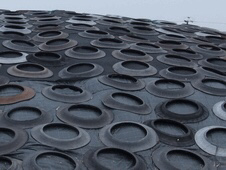
A covered pit with sidewalls.

There are several different ways to store the grass harvest, but most often it simply gets piled up. We call it a silage pit. It generally consists of a cement floor surrounded by cement blocks. The grass is piled and compacted over and over. Often times the grass towers several feet above the cement blocks with a slope to the front of the pit. When the harvest is finished the pit has to be covered with plastic. The plastic is held down by tire sidewalls. This is where I usually come in. Yes, for several years I would climb that black tarp covered grass hill with a truck sidewall in each arm, and carefully place the tires all over the tarp. I have clocked it with my running app, and it can be the equivalent of 5 miles over 8 hours with 40 pound weights. It usually took my husband and I two full days of this work. Did I mention the tarp is black plastic? Needless to say this is a hot, dirty job.

And, then in 6-8 weeks we have silage: Fermented grass with layers of mold on top. Yes, this what the farmer reaps after all his hard work a pile of feed that has to have the mold shoveled off before he feeds it to his animals. What does this mean? You guessed it! Lots more hardwork. 

But let patience have her perfect work, that ye may be perfect, and entire, nothing wanting. James 1:4

Perhaps you have seen that beautiful, green freshly cut grass being hauled in the silage trucks to the farm. Sure it means doubling up an allergy medicine during silage season, but it smells good and looks pretty. Trust me, the finished grass silage looks nothing like that. It doesn’t smell like it either.
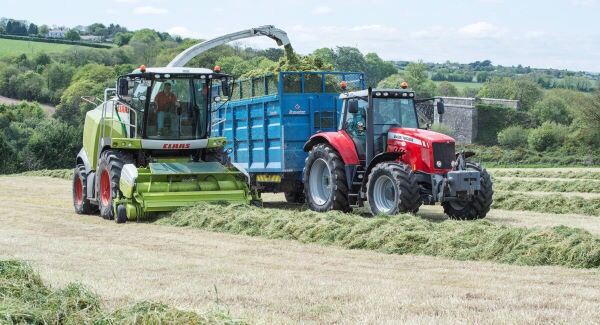

Now I will give you that silage done right doesn’t smell too bad. However, when you put your silage in a pit, there is always some spoilage. Spoilage is not pretty. It doesn’t smell good either. In my mind, moldy grass silage can smell as bad a manure. And it is worth less. The spoilage does not make as good of fertilizer as manure, but that it all it is good for.

I didn’t always have much contact with the moldy grass silage. Until the day my husband asked that question which is the bane of all farmer’s wives: “Don’t you want to spend some time with me ?” For a farmer’s wife this only means one thing–work. And, trust me, there are not a lot of clean jobs on the farm, and none of them are romantic. I have often thought my life could have had its own season on the show Dirty Jobs.

Of His own will begat He us with the word of truth that we should be a kind of firstfruits of his creatures. James 1:18

This particular morning would bring me the privilege of shoveling off the mold off the silage pit. I experienced silage in a whole new way. But, as often happens with me and farm work, I experienced a truth of God in a whole new way. 

You see I when you are attempting to pick up your cross and follow after Christ you are always having to put down some things. Let’s face it crosses are heavy, and you cannot go around carrying a cross while carrying a nap sack full of things. Good things or bad things, there is just no room for anything else on your back, but that cross. Unfortunately, I still have some things in my nap sack. Actually, I have quite a few things. And it gives me a discouraged heart. A heart that is not sure it can keep that cross on its back. And at that moment on top of a 20 ft pile of molded, fermented grass I saw my heart.

Wherefore lay apart all filthiness and superfluity of naughtiness, and receive with meekness the engrafted word which is able to save your souls. James 1:21

If you have never seen an open grass silage pit, it is a sight to behold. The top layer consists of fluffy, white moldy grass. This grass flakes off easily in large shallow clumps. It is quite easy to throw off to the ground. But the next layer is kind of grey nastiness that is a lot heavier, and harder to throw down to the floor of the pit. This grass still comes off in nice sized chunks. You almost think you are to the good fermented grass at this point, but you have been deceived. On top of the edible, fermented grass is the slimy black mold. Not only is this mold dangerous to stand on, but in order not to waste good feed you must carefully scrap off just the black. Finally, you get to feed worthy of your dairy cows,and you leave it. Well, at least for a week or so. Then the tarp must be pulled back a little more, and you begin the whole process again. There is also that bit of nastiness on the pit floor that has to be carried away to the manure pile.

But, be ye doers of the word and not hearers only, deceiving your own selves. James 1:22

And so my inward life is like that grass silage pile. When Christ saved me, and gave me a clean heart, it was fairly easy for me to let Him get rid of the top layer of sin. Obviously bad stuff. The stuff everyone can see. But the next level, was a a lot more work for both of us. It took several different commitments on my part. It took being faithful to read and study His word. It took joining a body of local believers, called a church. It took living with an out loud testimony for Christ. It was some times a painful process, but mostly just work. But now, there is that black, slimy stuff. The stuff that touches all the good work Christ has done in me, and threatens to spoil it. This is deep painful stuff. The roots of all my selfish sin. The stuff that is so much a part of me I don’t know how to live without it. This is the stuff that makes me feel like collapsing under that cross. 

As I was breathlessly shoveling a way at that moldy silage I could hear my Savior pleading with me to let Him take off another layer of mold. I could see the mold. It was nasty, useless, and dangerous. But, it was a part of me. I reminded Him that I had already lot Him remove something deep a few months ago. That mold was guilt. I didn’t know how to live without it. It was a part of me I put down at the altar at youth camp that summer–as counselor! That had been humiliating enough. It had been terrifying. I wasn’t ready to have my heart’s mold shoveled at any more, not yet. Couldn’t we just leave it alone for a while longer?

For if any be a hearer of the word, and not a doer, he is like unto a man be holding his natural face in a glass: For he beholdeth himself and straightway forgetteth what manner of man he was. James 1: 24

And being the gentleman He is, He left me shoveling at that stinky rotten silage to ponder my choice. I was choosing hurt rather than healing, black night versus beautiful light, sin instead of righteousness. I wanted to keep my silage pile of life the way it was. As if in leaving decaying matter to the open air of life could stop the fungus from growing on top of it, and keep it from multiplying in a myriad of directions. But it was my choice. And in that moment I choose to hold onto my 20ft deep pile of insecurity versus receiving the security of the Rock. 

Life is like a silage pile. We all have rotting parts, inside and out. Sometimes we try to keep our rottenness covered with black tarps, and sealed with truck sidewalls. But the rotten juices flow out from beneath, and we are not fooling anyone but ourselves. We even plug nose to our own stench and try to point out the rotten juices from other silage piles. And, God forbid, someone else would actually pull back their tarp and start to shovel away the mold. They just lay out all their life  for everyone to see. But beneath the varying molds, and layers of foulness is something good. Something that can feed others to produce a life giving substance. Maybe it IS time to open that silage pit.

But whoso looketh into the perfect law of liberty, and continueth therein, he being not a forgetful hearer, but a doer of the work, this man shall be blessed in his deed. James 1:25

That day I wasn’t ready for another gentle scrape from my Savior, but I knew the day would come that I would grow weary carrying around that sickening mold. And the question remains, why carry it another day?
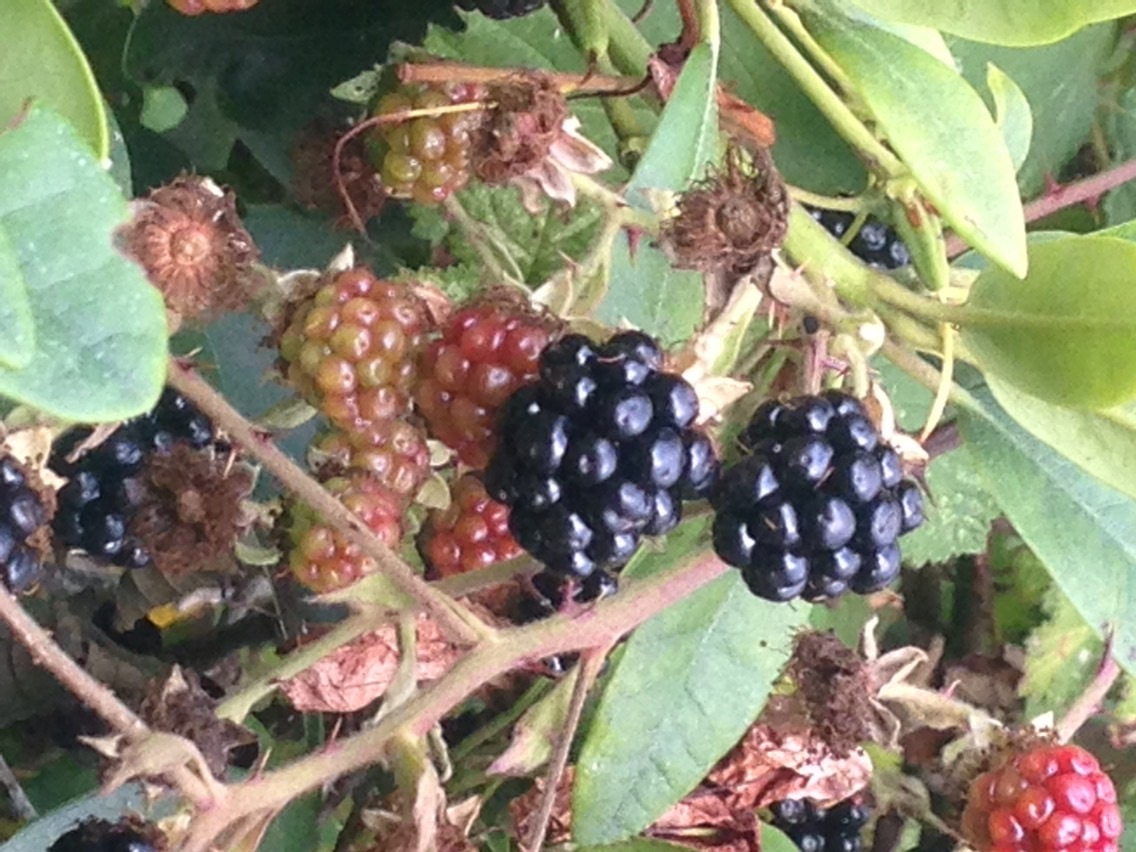
 

Blackberry as Sinhttps://appre

image

Blackberries are here. Plump, juicy, syrupy sweet, blackberries. Blackberries are one of most desired summer treats in our home on the northern Oregon coast. Not only are they delicious, but since they grow in such abundance,  they are literally free to the picking. In fact, I already have two pints in the freezer. Blackberries are just another blessing we receive from this particular, beautiful place we get to live.

However, blackberries have their flaws. I was reflecting on this the other day as I was laboring in the hot sun in my yard. My yard. My yard is a filled with all kinds beautiful flowering plants: Calla lilies, irises, hydrangeas, and  many rhododendrons. Then there are the not so desirable plants. I would almost call them evil plants. They are literally killers. Some are invasive, like creeping ivy. Some are amazingly, self-propagating, such as laurel. Others have a very strong symbiotic relationships with birds, such as holly. All of these plants grow unbidden, almost secretly under the cover of other plants. Often by the time you realize they are there they have successfully imbedded themselves into the soil, and around a beloved shrub–nearly chocking the plant of nutrients and sun. I have declared war on these enemies of my yard.

Not so the blackberry. No, the blackberry is complicated. On one hand, I don’t particularly want it all over my yard. But, on the other hand, the ugly bramble produces that delicious berry. I have to weigh whether I have a greater desire to rid myself of the weed, or whether I want to enjoy the fruit of that weed for a season. What is a girl to do?

In situations like this it is helpful to understand the nature of my foe. Blackberries are native to many climate types, including the Northwest. No one has to plant blackberries, they just grow. In fact, it is not advisable to plant blackberries. Blackberries are perennials that can grow roots three and half feet deep. They can grow as tall as 29 feet. It is no wonder that blackberries are often called bramble. Bramble is defined as an impenetrable thicket. Not something you want on your front lawn.

As if its incredible ability to grow were not bad enough, blackberry plants have shoots with prickles. Every rose has its thorn, and every blackberry has a hundred prickles. Don’t be fooled by the cute name, prickles can penetrate denim. I have yet to successfully avoid being prickled by blackberry while pruning or picking them. These prickles often becomes splinters. Of course, these prickly weeds whose super power is growing, can quickly starve other plants. The result of leaving blackberries unattended is death to all the plants within its grasp.

Perhaps now you understand my dilemma. If I let them grow, then they will continue to wreck havoc and mayhem on my yard plants. However, if I attempt to eradicate them, then I will miss out on the many berries that have yet to ripen.

Blackberries reflect the nature of sin. You see sin comes naturally for us fallen creations of God. After punishing the unbelieving through a world-wide flood (a flood that those unbelievers were forewarned of for 100 years!), God said to Abraham, “I will not again curse the ground any more for man’s sake; for the imagination of man’s heart is evil from his youth . . . ” (Genesis 8:21). Sin grows rampant in our hearts from our birth. This gives sin the ability to plant deep roots, and grow tall shoots. These shoots then bend over and plant more roots. The stolen cookie must be lied about, repeatedly.

Sin also grows from seeds plants by others: An abandoned child often develops insecurity. Insecurity can lead to a whole suitcase full of sinful behaviors as he or she matures. And the sin grows on and on. Soon you have a heart full of bramble. Prickly bramble. It tears at you. It leaves scratches and splinters. This bramble separates you from the Holy Father, and decimates your relationships with others.

To demolish the blackberry bramble, most people use that wonderful spray, Crossbow. It effectively kills the plant. However, it does not clear away the results of the tangled mess. The bramble must be cleared away, and burned.

Thankfully, the human heart has a better, non-toxic remedy for its sin bramble. You see Jesus didn’t die on a cross to make sure you understood you had sin problem: He died to kill your sin problem. “For God sent not His Son into the world to condemn the world; but that the world through Him might be saved” (John 3:17). But death was not he end: He rose again, giving us eternal life AND victory over sin. “Knowing this, that our old man is crucified with Him, that the body of sin might be destroyed, that henceforth we should not serve sin” (Romans 6:6). This is where even Baptists shout, “Amen!” (To my non-Baptist friends, Baptist tend to be more reserved worshippers of Christ.)

Victory, my fellow bramble hearts, means Christ doesn’t leave you alone to deal with those prickly left overs. Actually, Christ, through the Holy Spirit, takes on the work of clearing away the thorny, dead bramble in our hearts.  Philippians promises us that, ” . . . He which hath begun a good work in you will perform it . . .” (6:13). Yes, we have to be willing to let it be cleared away. No, it is not always pleasant. But as dead vines are slowly ripped away you begin to see the Son through that once impenetrable thicket. It is a glorious sight to behold!

Of course, there may still be some hidden roots of sin, but that is a topic for another day.

And what of my blackberry bramble? Well, I think I will let some of the berries ripen. Nevertheless, I am resolved to not let them get out of hand again. I fully intend to overcome the blackberry plants in my yard. And, through Christ, I will also have the left over bramble in my heart cleared out, and burnt to ashes. I really have no use for it, anyways: Its fruit is dead, and its vines are prickly. Why would I want to keep that fruitless, hurtful mess?

The Calling

Delight thyself also in the Lord; and He shall give thee the desires of thine heart. Psalms 37:4

Being called. It can be a mystery. Indeed if you are not a believer in Christ, it is a mystery: For the first calling God makes to everyone is to faith in Him. “Unto you, O men, I call; and my voice is to the sons of man” (Proverbs 8:4). And lest you not understand your need of salvation Christ says, “. . .  for I am not come to call the righteous, but sinners to repentance” (Matthew 6:13). And just in case you fail to see yourself as a sinner Scripture repeatedly states, “As it is written there in none righteous, no, not one” (Romans 3:10). So, my beloved, unbelievers, the first calling of God you must answer, is the call of God to repentance, and faith in the death, burial, and resurrection of Jesus Christ.

But, what is the calling of the believer? Scripture is full of general callings for the believer: Baptism and church membership (Acts 2:39-41), service in the church (Romans 12 and I Corinthians 12), prayer (I Timothy 2:8), study of God’s Word (II Timothy 2:15), preaching the gospel (Mark 16:15), and having a pure conscience toward God–from the inside out (Proverbs 4:23 and Romans 12:1-2). Check, check, check. You got all that covered, right? Well, if you are like most believers, you may not have that all covered. However, you are letting the Holy Spirit work these things through your life. (By the way, the above is not a checklist: These are lifelong goals.)

So, now what? Isn’t there something more? Something deeper? Something that satisfies that longing to be something beyond mediocre? Something that transcends your adjustable tax income, how great you are at playing this sport or that instrument, or how many likes you got on your last Facebook post? Now that you are Christ’s don’t you just want to know, “What am I here for?”

The answer is: I have no clue.

Oh, I know YOU have a purpose. God’s Word says, “For we are His workmanship, created in Christ Jesus unto good works, which God hath before ordained that we should walk in them” (Ephesians 2:10). Did you hear that? The God of the Universe created you for a special work, and has already made the way for you to accomplish that work.

But, what is your specific purpose? The answer is for you to know from God.

Now most of us will NOT have an awesome vision like Isaiah did when he was literally brought to the throne room of God (Isaiah 6). Probably we won’t get an angel sent to us like Zacharias, Joseph, and Mary (Luke 2). And it is way too late to get a preincarnate appearance of Christ, such as Abraham (Genesis 18), Jacob (Genesis 32), Moses (Exodus 33), and Joshua (Joshua 1). And since Christ has only been seen by Paul and John since about 100 A.D., I don’t think flocking to Damascus Road or the Island of Patmos will allow us to get a physical vision of Christ with specific directions for our lives.

So how do you know God’s calling on your life? You just know. If you are reading God’s Word;  getting taught in a local, Bible preaching church; praying; AND specifically praying for God to show you His will for you–you will find it. “For it is God which worketh in you both to will and to do of His good pleasure” (Philippians 2:13). As a very, wise pastor has said, “God does not through His will in the wilderness, and expect you to find it.”

For me, God reveals His will for my life by gentle nudging: Encouragement from others, natural talents, unmet desires (also known as frustration and disappointment), and observable needs for others and the world. Eventually, if I don’t get it, I hear His distinct voice. It is true Christians hear voices in their head. Lots of them. But Christ has promised, “My sheep hear my voice, and I know them, and they follow me” (John 10:27). Most often it is a whisper, but sometimes it becomes a shout. And when my Shepherd starts shouting, I had better listen, because it is always for my own good.

So what is your calling? What are you going to do when you grow up in Christ?